AmeriCorps Recruitment Toolkit for State Service Commissions
Equip your program network with adaptable recruitment materials. The commission coordinates shared messaging and resources; each program verifies its own opportunities, eligibility, benefits, deadlines and application process.
Created by the America Learns Service Signal Public Relations Team
Updated October 22, 2026
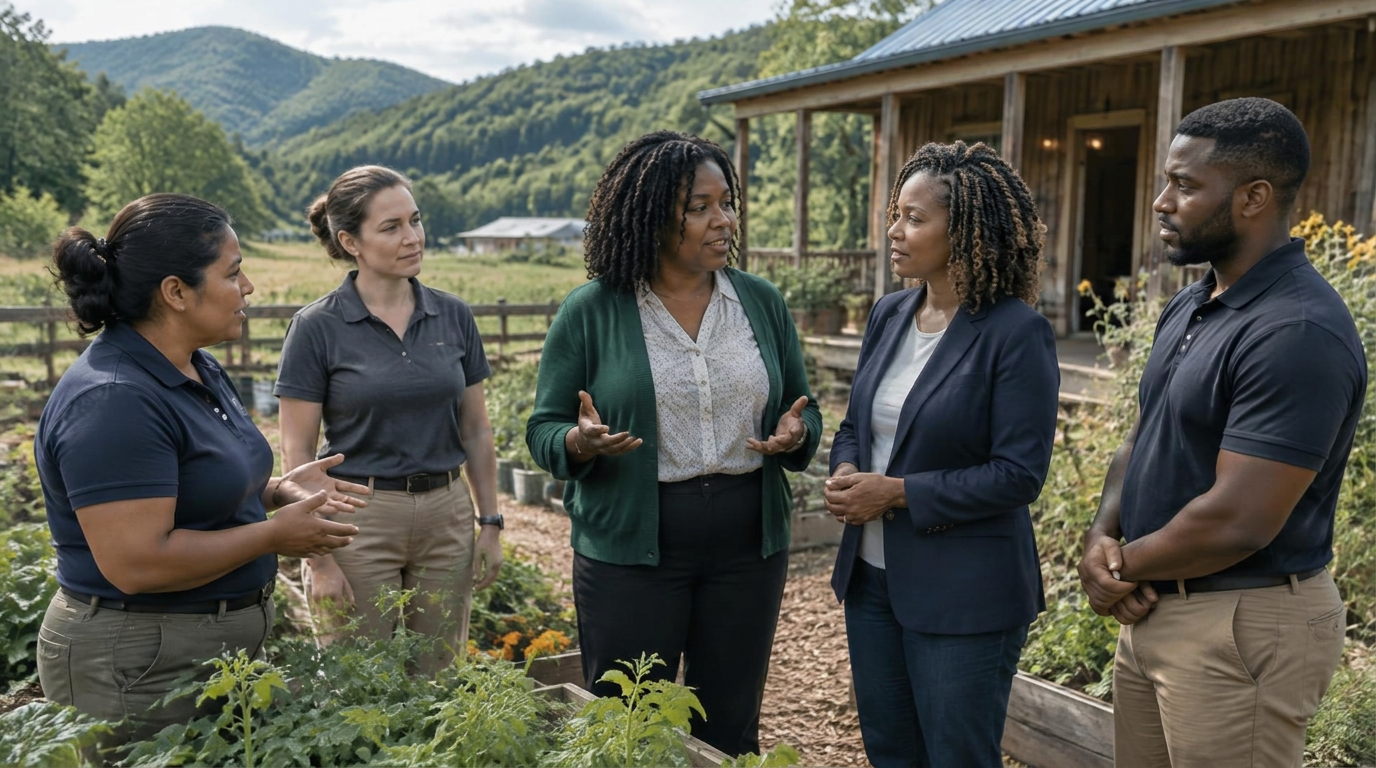
Illustrative image—not a customer story or an actual event.
1. Separate statewide coordination from local recruitment
A commission can give its network a consistent starting point without making every program sound the same. Supply shared framing, distribution instructions, a review date and a contact for corrections. Each participating program owns its local facts, approvals, applicant questions and application link.
This is an independent resource from America Learns, not an official AmeriCorps or commission-issued toolkit. Confirm all requirements against the current guidance that applies to your program.
2. Collect a verified fact sheet for each opportunity
Before adapting a message, collect the details below and record who verified them and when. Do not imply all programs offer the same benefits or eligibility rules. Leave an unconfirmed detail out until the program checks it.
Organization and program names; service location and duties
Term dates, service commitment and eligibility requirements
Confirmed living allowance and benefits, including any conditions
Application deadline and working application URL
Applicant questions and accessibility contact
Factual owner and verification date
3. Collect stories with permission
Ask a member: “Why did you join?”, “What does a typical day involve?” and “What should an applicant know before applying?” Use their actual answers, not an invented ideal candidate.
Record permission for quotes, names, photos and each intended use. Let the person review how their story is represented. Include image credits and ALT text with shared assets, and follow program safeguarding requirements.
4. Give every program room to adapt
Mark which shared wording must stay consistent and which passages can change. Keep factual fields clearly separated from optional storytelling. Add a version date, an owner and instructions for replacing outdated materials.
Ask programs to check their own deadline, link and benefits before publishing—even if they used the same materials last year. Provide an accessible text version alongside any flyer or image.
5. Use a deadline-relative campaign calendar
This is an example planning rhythm, not a requirement. Move the steps to fit each program’s real recruitment timeline, assign an owner and select channels based on evidence about your candidates.
Eight weeks before closing: confirm the opportunity facts and publish an awareness message.
Six weeks before: share an approved member story and invite questions.
Four weeks before: host or promote a confirmed information session; equip partners to share.
Two weeks before: answer common questions and send a deadline reminder.
Closing week: confirm the link still works and state the exact deadline and time zone.
After closing: remove expired calls to apply and review inquiries and completed applications.
6. Measure interest without inventing attribution
Agree on definitions and a reporting period before asking programs for results. Where practical, use source-tagged links for different channels. Track inquiries and completed applications separately; visits are not applications.
Ask what candidates said helped them decide. Report what you observed without claiming the toolkit caused every change. Keep applicant-level personal information out of shared commission reports unless you have a legitimate, authorized need for it.
Templates to make your own
Illustrative templates—not actual member stories, pitches or results. Replace every bracketed field with verified information before sharing.
Commission-to-program launch email
Subject: Adaptable recruitment materials for your next application deadline
Hello team,
Use these materials as a starting point for your program’s recruitment. Replace bracketed fields, verify eligibility and benefits, confirm permissions, and add your application link before publishing.
Keep [approved shared language] consistent; adapt examples and tone for your community. Each program is responsible for its local facts, approvals and applicant inquiries.
Materials: [link]
Version and review date: [date]
Send factual corrections or accessibility needs to [contact].
[Name]
[Commission and role]
Program awareness post
Interested in serving [community]?
At [program], AmeriCorps members [specific duties]. Applications for [term] are open through [date and time zone].
See the service commitment, eligibility, confirmed benefits and application steps: [application link]
Questions or accessibility requests: [contact]
#AmeriCorps #AmeriCorpsWorks #NationalService
Member-story post
“[Approved quote about a real member’s experience.]”
[Member’s approved name or description] serves with [program], where members [verified duties] in [community].
Curious about this opportunity? Check the service commitment, eligibility and confirmed benefits, then apply by [date and time zone]: [application link]
#AmeriCorps #AmeriCorpsWorks #NationalService
Deadline reminder
Applications for [program and term] close [date and time zone].
Members [verified duties] in [location]. Review the service commitment, eligibility, confirmed benefits and application steps before applying: [application link]
Questions or accessibility requests: [contact]
#AmeriCorps #AmeriCorpsWorks #NationalService
Commission statewide post
Explore AmeriCorps service opportunities across [state].
Participating programs have different roles, locations, eligibility requirements, benefits and deadlines. Review current listings and apply through the relevant program: [verified opportunity directory]
#AmeriCorps #AmeriCorpsWorks #NationalService
Partner-forwarding email
Subject: Share a service opportunity in [community]
Hi [Partner name],
Would you share this opportunity with people who may be interested in [specific work]?
[Program] is accepting applications for [term] through [date and time zone]. Members [verified duties] in [location]. Full eligibility, service commitment, confirmed benefits and application steps: [link]
Please use the current details at that link and direct questions to [program contact].
Thank you,
[Name and role]
Information-session invitation
Explore AmeriCorps service with [program]
Join a confirmed information session on [date, time and time zone] at [location or meeting link]. Hear what members do, learn the service commitment and ask about current eligibility, confirmed benefits and applying.
Register: [registration link]
Accessibility requests or questions: [contact]
Application deadline: [date and time zone]
Flyer text
Serve [community] with [program]
AmeriCorps members [verified duties].
Location: [location]
Term and commitment: [verified details]
Eligibility and confirmed benefits: [short verified summary or information link]
Apply by: [date and time zone]
Apply: [readable application URL]
Questions or accessibility requests: [contact]
Before you share
Each program’s factual owner and verification date recorded
Required shared wording separated from adaptable local passages
Benefits, eligibility, funding status and deadlines confirmed per opportunity
Member-story consent, photo permissions, credits and ALT text included
Application and information-session links checked
Named review owner, version date and correction instructions provided
Common questions
Can a commission publish one message for every program?
A statewide message can point to a verified opportunity directory. Program-specific messages should name the local role and link to the program’s current details; do not imply one deadline or benefit package applies statewide.
Is this an applicant-tracking system?
No. This toolkit helps prepare and coordinate communications. Applications and eligibility decisions remain with the relevant program and its existing process.
Does a Field Kit automatically publish for every program?
No. Field Kits distribute materials that connected programs can adapt. Each receiving team reviews its version and chooses what to save or schedule; shared materials are not automatic authorization to publish.
More than a chatbot draft
A chatbot gives one person a draft. The Service Signal gives a commission a way to distribute adaptable messaging through Field Kits, with materials connected to each receiving team’s work. Programs can prepare audience-specific recruitment drafts, get teammate sign-off and schedule approved posts on their calendar. Community feedback and America Learns’ close human support add people to the process—not just another text box. It does not replace program eligibility checks or application systems.
 The Service Signal